
MeetUp Bachelor project
A dynamic web platform for archiving 10 years of meet-up history – with timeline, carousel and design system.
As part of my last semester, this Bachelor project served as a practical group assignment within the Media Informatics curriculum. The goal: to plan, design, and implement a digital product based on real-world constraints. Unlike the written thesis, this module focused entirely on collaborative work, applied design, and technical realization. It allowed students to bring together their accumulated skills and create a tangible, portfolio-ready result.
Behind the Scenes👨🏼💻
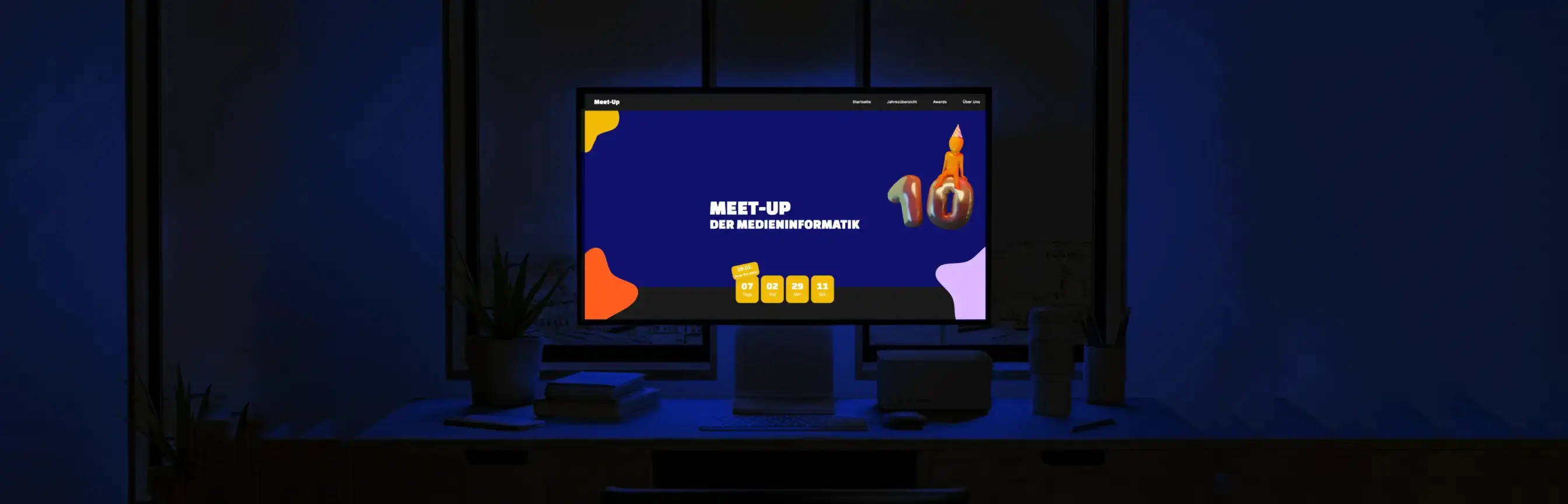
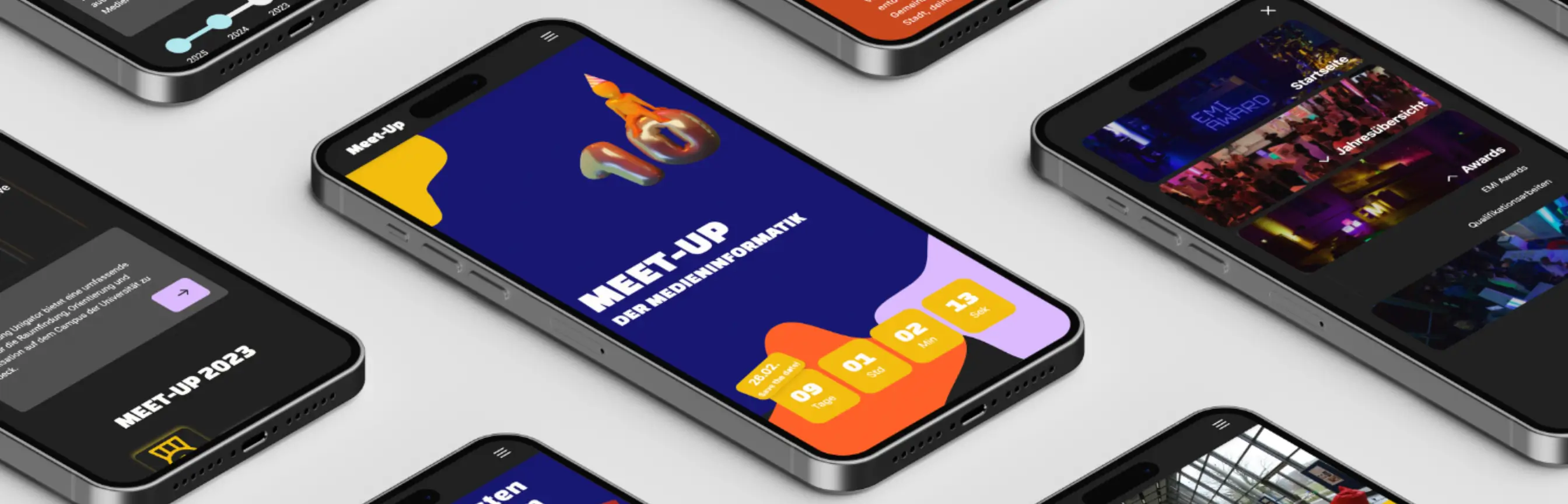
Introducing the result of my bachelor project at the university of Lübeck. A dynamic website that celebrates the Media Computer Science Meet-Up from my university. The Meet-Up has been around for 10 years now - and during this time many innovative ideas and exciting projects have emerged. To ensure that all these EMI projects and the best qualification theses are not forgotten, we have bundled them and presented them clearly on the new website. You can discover the modern website and get a structured insight into the history of the Meet-Up. Here on my portfolio site you will get an detailed inside view behind the creation process and many other informations regarding this Meet-Up website
The human-centered design process is at the heart of the website development and is here aimed at the Generation Z target group. Generation Z includes those born between 1997 and 2015 and is the first generation to become familiar with the diverse possibilities of the digital world at a young age. This generation is characterized by a high affinity for technology and a deep understanding of the digital world, which shapes their everyday life in many areas. Generation Z is not only one of the most technologically savvy groups, but also one of the most multitasking-capable, as they are used to using several digital channels at the same time. For this generation, technology should above all be seamless and usable. They prefer simple, naturally operable user interfaces that enable quick and uncomplicated use
The focus of the website design is a human-centered approach that takes all user groups, including people with disabilities, into account. In order to provide all users with easy access to the platform, the international standards of the WCAG guidelines (Web Content Accessibility Guidelines) are implemented at Level A. These define basic accessibility requirements and promote inclusion. Measures such as high-contrast color schemes, alternative image texts, clear navigation elements and a clear page structure ensure an accessible and user-friendly website that is tailored to the needs of different user groups.
The goal was to select and refine the best solution. Various methods such as the “sticker decision”, “heat map” and “quick critique” were used to identify outstanding ideas and prepare them for the prototyping process. Finally, a storyboard was created to plan the prototype for the next day. After that, the main point of this step could begin: creating a storyboard.
The technical foundation of the website is based on Nuxt.js, a framework for Vue.js, and Tailwind CSS, a modern utility-first CSS framework. In addition, DaisyUI, a UI component library, is used to integrate ready-made design components. These technologies were chosen to ensure efficient and flexible development that meets both the design and functional requirements of the project. The chosen technologies also provide a robust foundation for the implementation of the project. Nuxt.js ensures performance and scalability, Tailwind CSS enables flexible design, and DaisyUI accelerates development through ready-made UI components. Together, they enable an efficient, user-friendly and accessible website that meets the needs of the target group and is designed to be future-proof.
The evaluation using the UEQ and the Web-CLIC questionnaire as well as the supplementary qualitative survey reveal a very positive user experience overall. The website meets both the pragmatic requirements (e.g. comprehensibility, efficiency) and the aesthetic expectations (attractiveness, appeal) of the primary target group, Generation Z, to a high degree. These findings indicate a successful balance between functional and emotional-aesthetic quality, but also point to potential for further design accents. In view of the limitations (e.g. small sample size, bias due to a tech-savvy environment and self-selection), the generalizability of the results is limited. Nevertheless, the results provide constructive approaches for optimization, such as the integration of additional visual elements.