
August 2023
A goal-finding app with gamification elements.
The result of a one week-long design sprint.
The result of a one week-long design sprint.
Goaly 
Design Sprint
Design Sprint
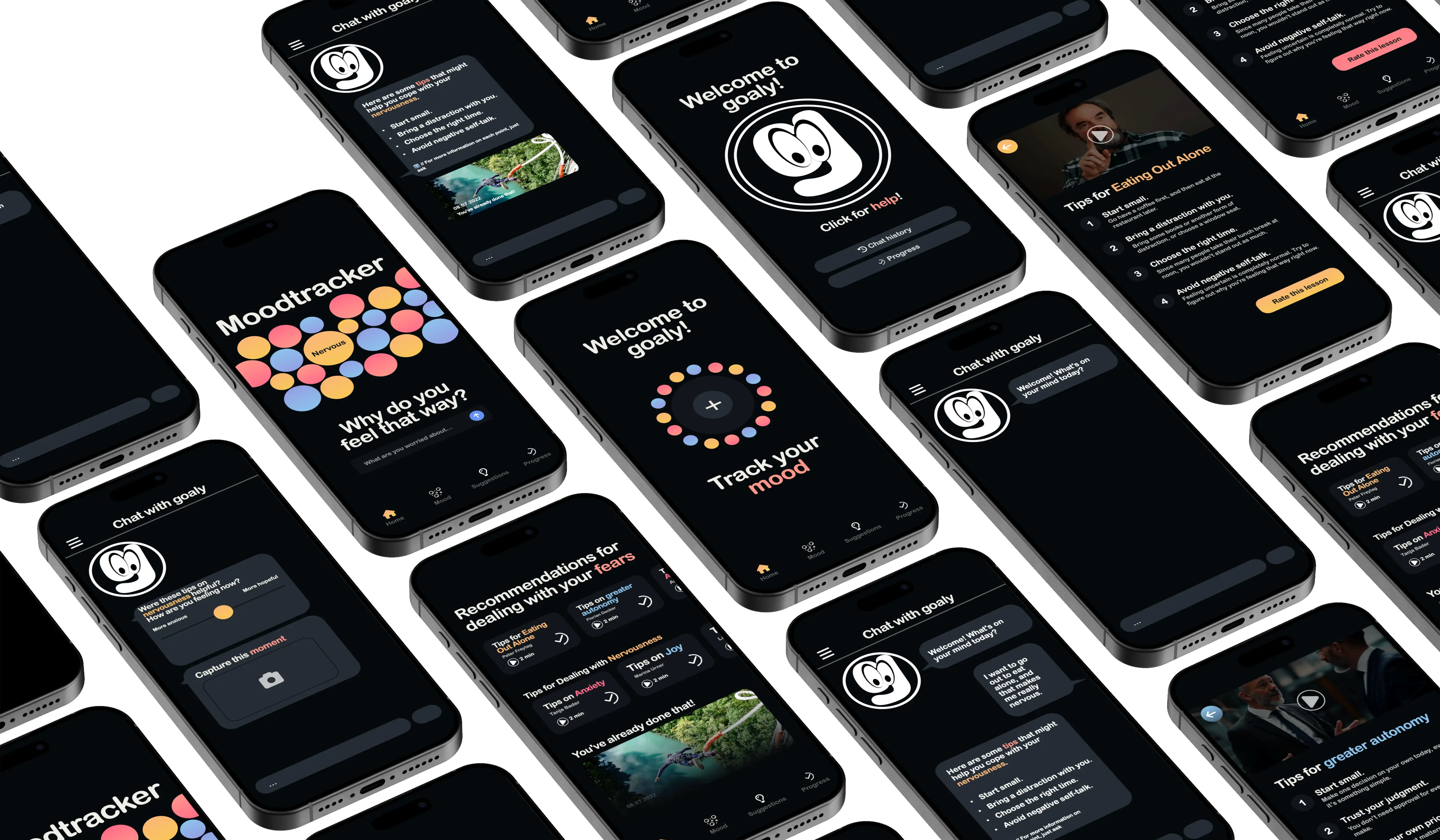
/dɪˈzaɪn ˈspɹɪnt/As part of a university module “Gamification”, a five-day design sprint was carried out. A design sprint is a intensive, structured process that teams use to drive innovation, solve complex challenges, and test new concepts. Goaly is a goal-finding app with gamification elements that guides users through structured decision-making. This project includes two prototypes to evaluate the acceptance of different approaches: a mood tracker to motivate people with expert tips, and a chatbot as a more personal way of interacting.
Highlights
Process
Five steps.
One clear direction.
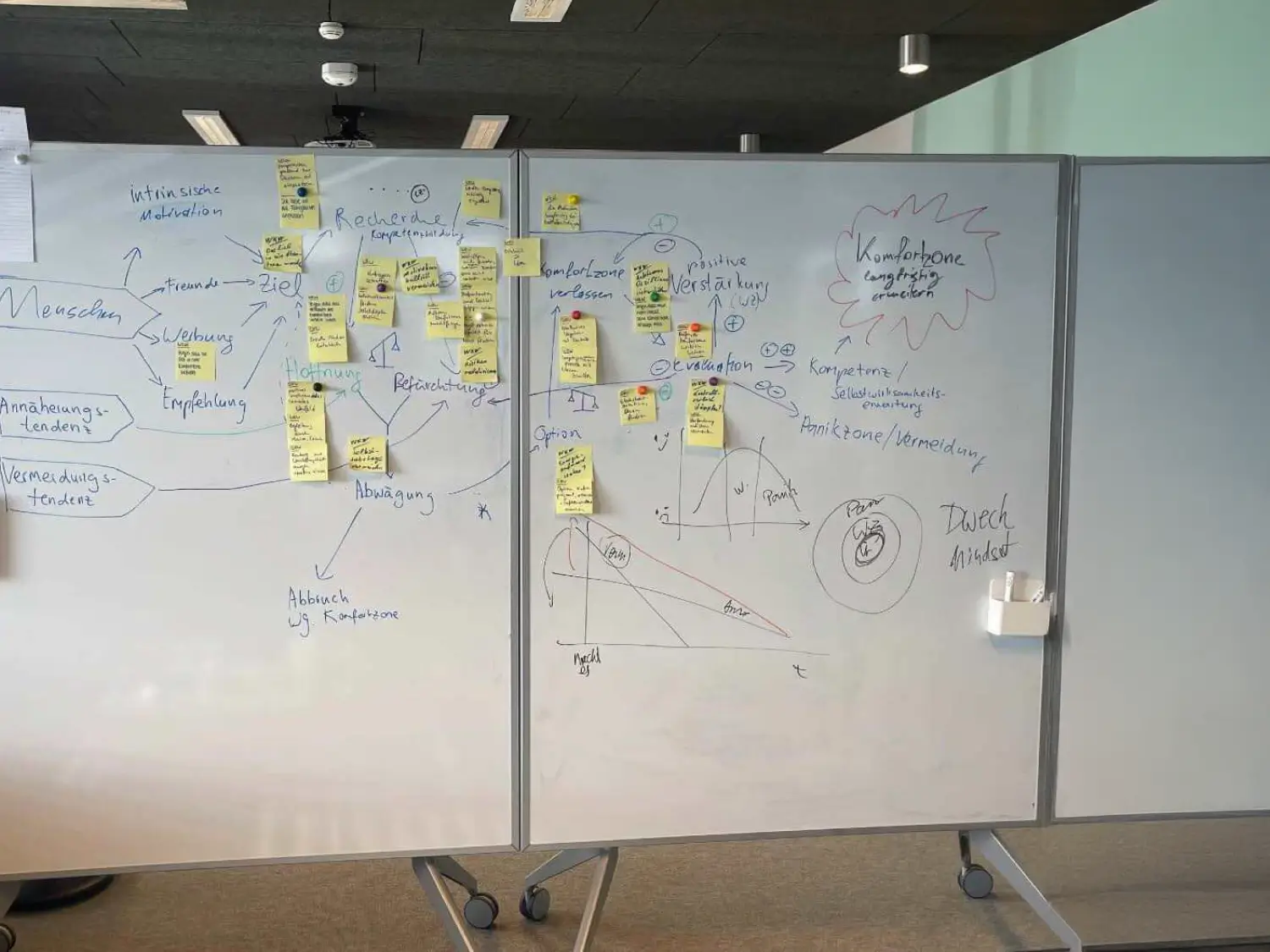
Day 1 – Understand 💡 After setting long-term goals, Sprint questions were written down to determine where problems could arise. These sprint questions serve as a tool to ensure that the sprint has a clear and successful course. As well as clarifying problems and challenges.
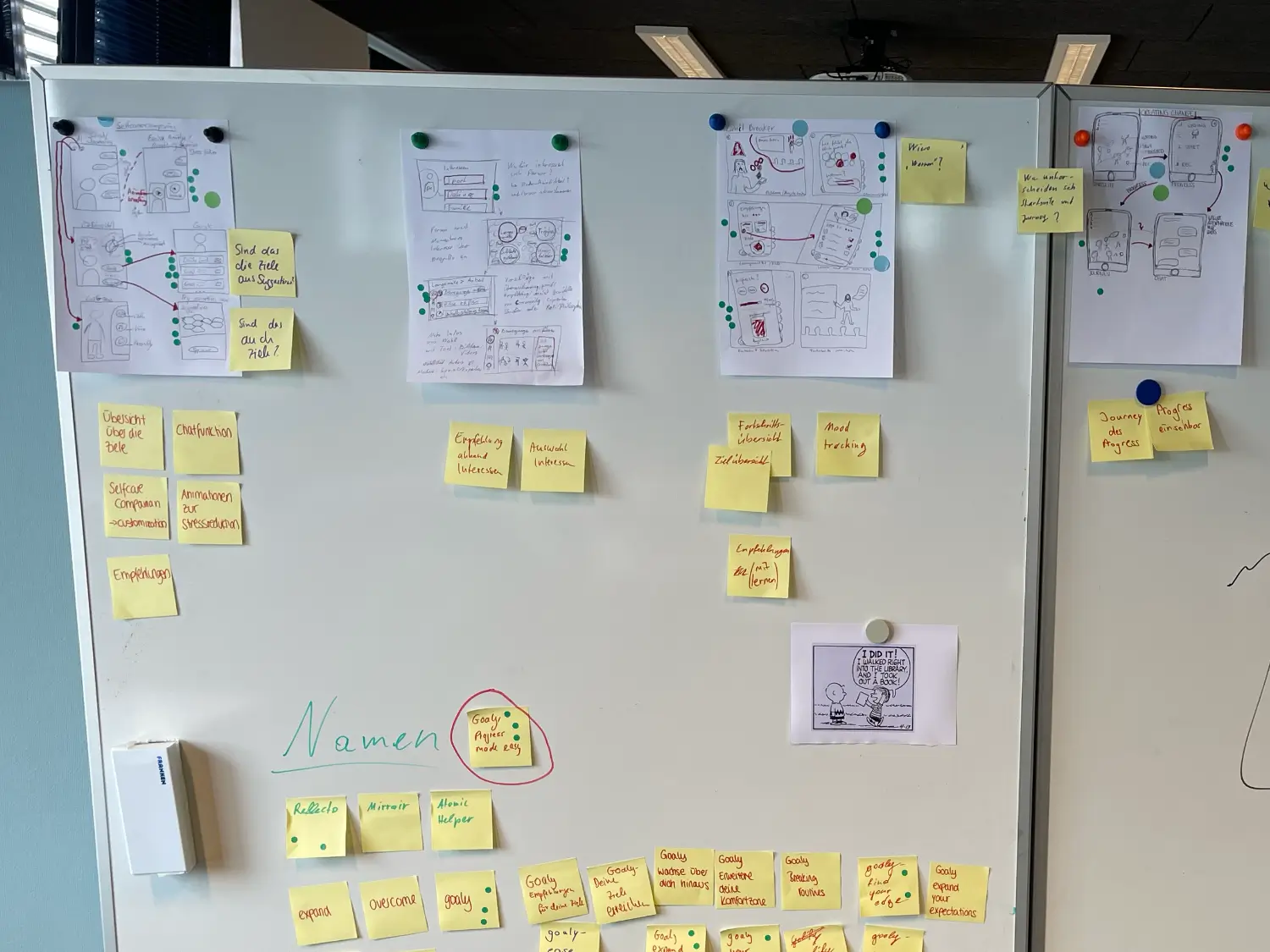
Day 2 – Sketching ✍️ Sketching is a way of conveying ideas. It's not about beauty, but about comprehensibility. Recording as many possible solutions as sketches is crucial. Structured approaches, such as 'Crazy 8s', were used. Ideas were generated individually to avoid any influence.
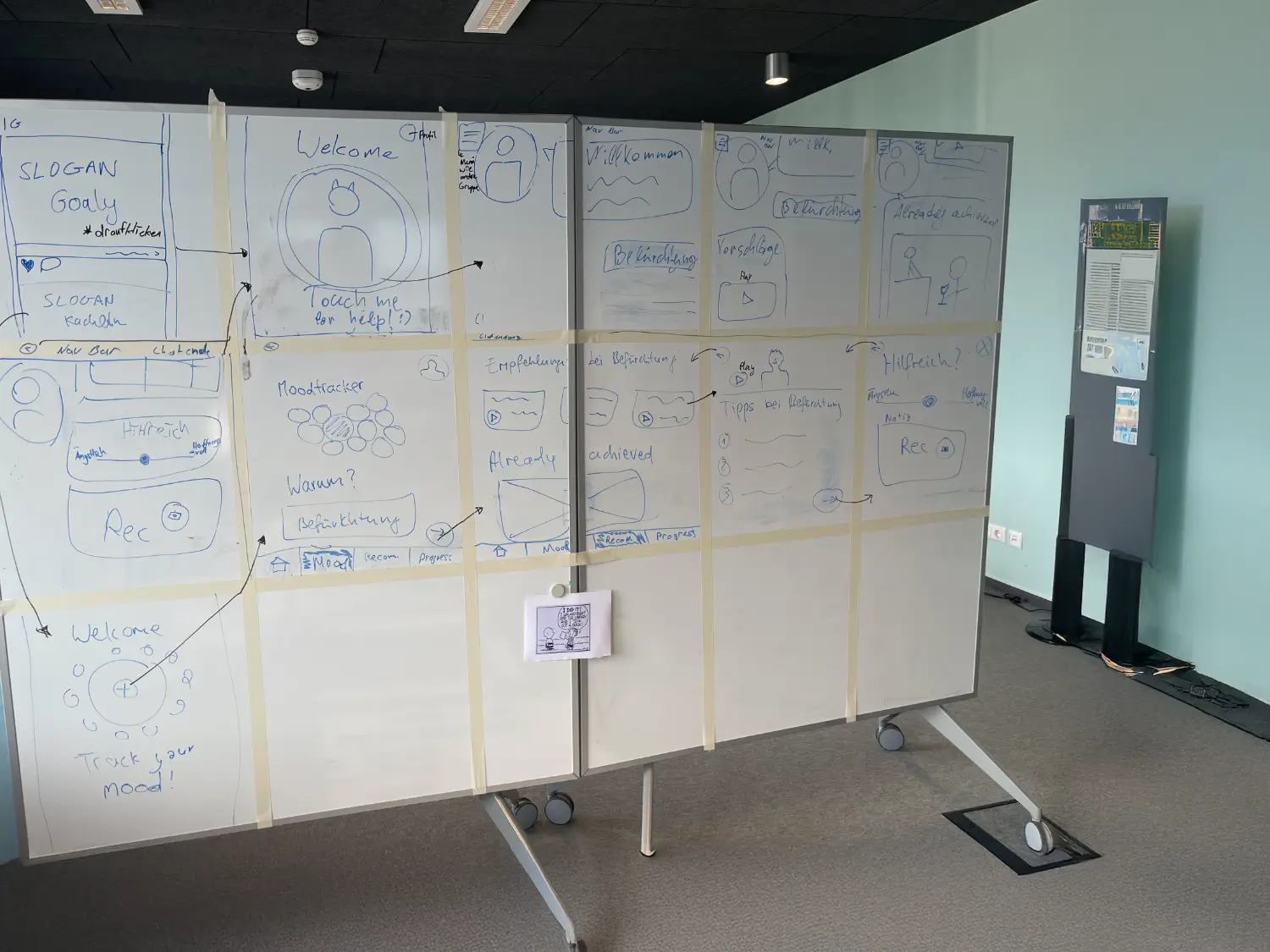
Day 3 – Decision ⚖️ The goal was to select and refine the best solutions. Methods such as 'sticker decision', 'heat map' and 'quick critique' were used to identify and prepare ideas for the prototyping process. A storyboard was created to plan the prototype for the next day.
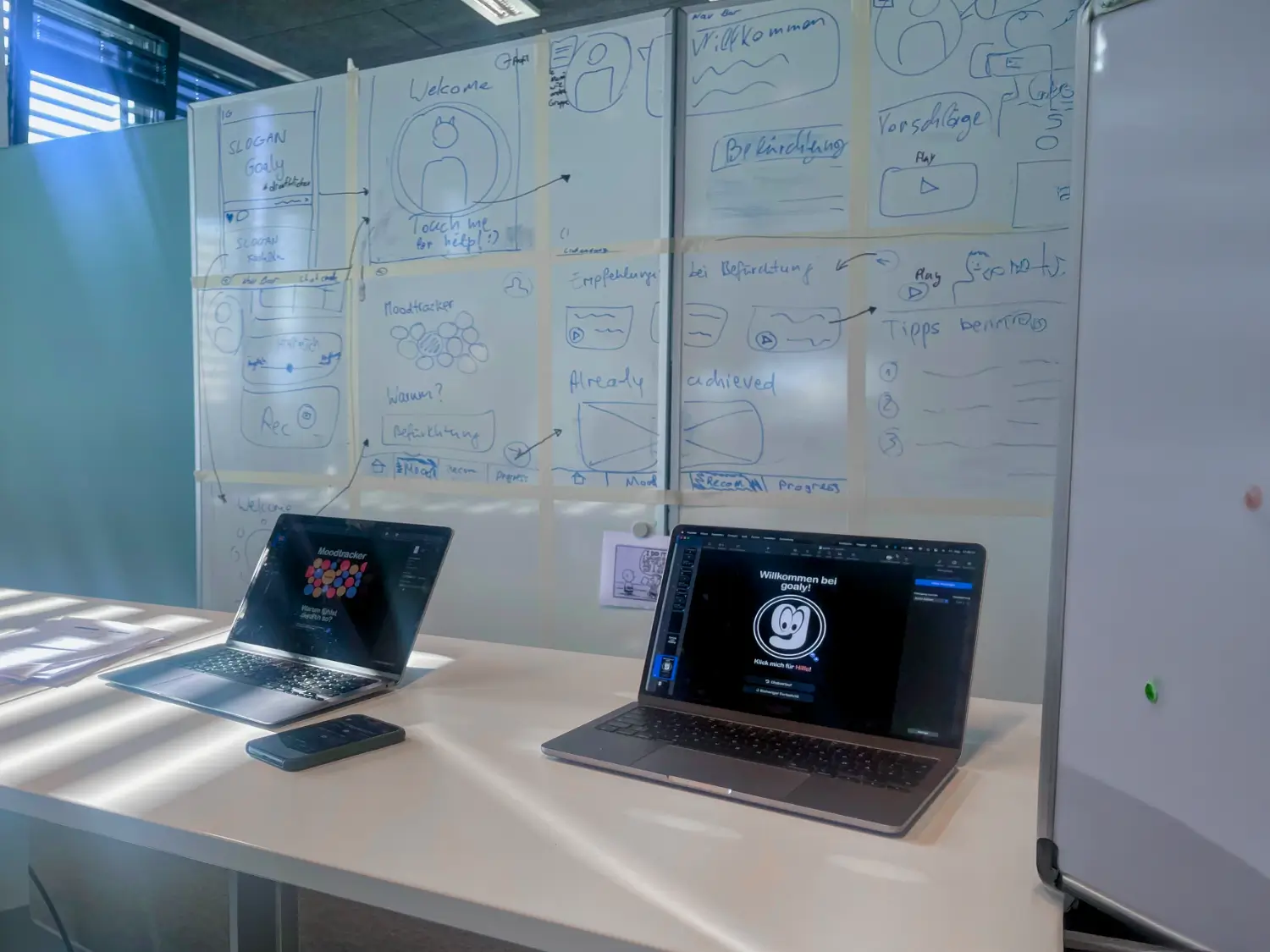
Day 4 – Prototyping 👨🏼💻 The aim of the day was to create a functioning prototype for each variant. This sprint step was intended exclusively for developing the prototype and preparing the interviews. A working prototype for each variant was built in Keynote.
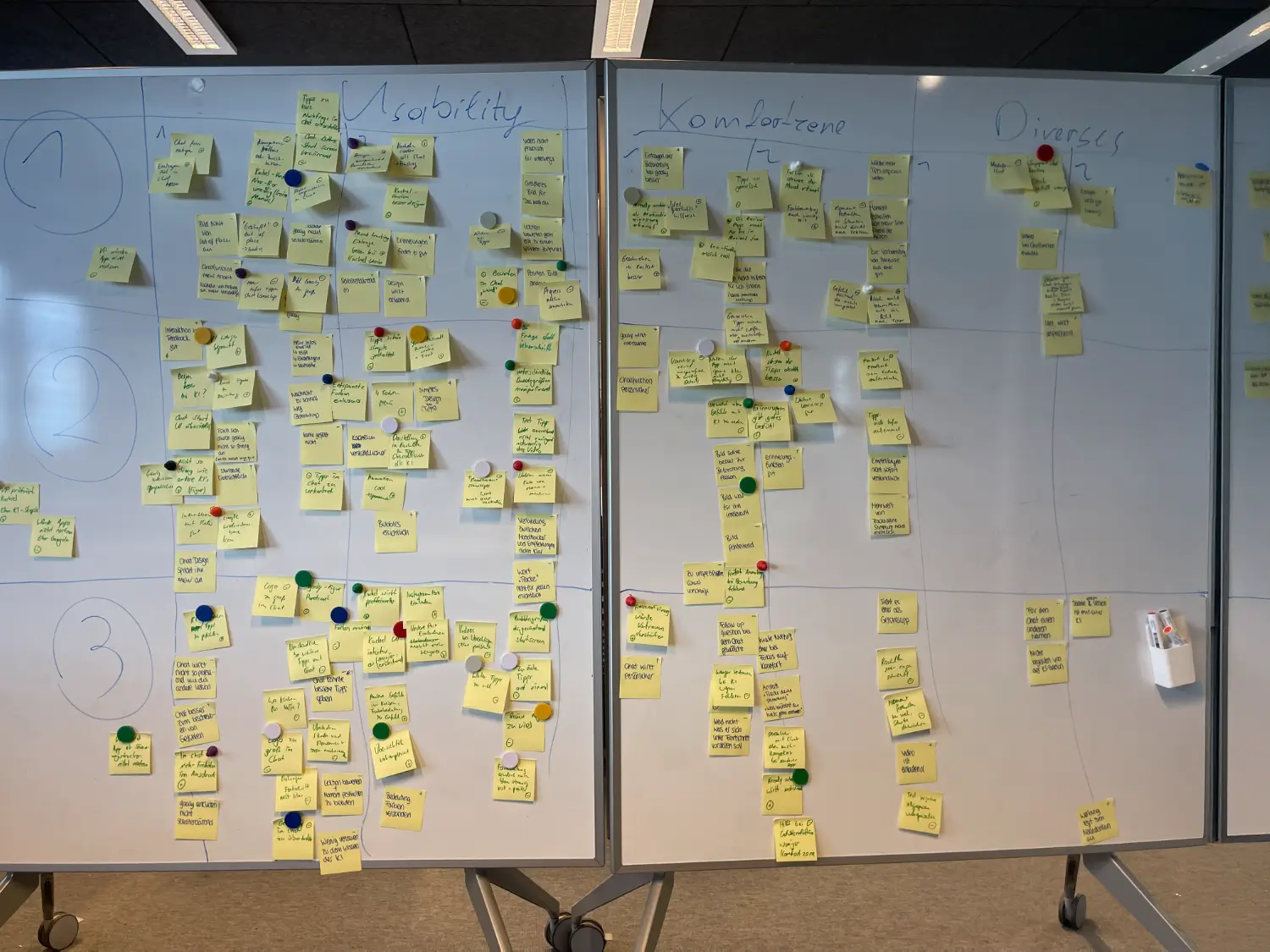
Day 5 – Testing 📋 At the end of the sprint, we evaluated the prototype and considered future improvements. The most comments were about usability, followed by comfort zone. The prototype should be developed further based on this feedback for example in a new iteration of a sprint.